Sudden cardiac arrest can happen without warning, leaving a person unresponsive and unable to breathe normally. In this situation, using an automated external defibrillator (AED) as soon as possible can help improve the person’s chance of survival. An AED checks the heart’s electrical rhythm and delivers a shock when needed to help restore a normal rhythm.
In this guide, you will learn when to use an AED, how to operate it step by step, and common mistakes to avoid during an emergency.
What Is an AED and How Does It Work?
An automated external defibrillator (AED) is a portable electronic device used during sudden cardiac arrest. It checks the heart’s electrical rhythm through adhesive electrode pads attached to the person’s bare chest.
If the AED detects a shockable heart rhythm, such as ventricular fibrillation (VF) or pulseless ventricular tachycardia (pVT), it advises the rescuer to deliver an electrical shock. This shock can help stop the abnormal electrical activity and allow the heart’s normal rhythm to return.
If the device does not detect a shockable rhythm, it announces that a shock is not advised and instructs the rescuer to resume CPR.
An AED does not automatically restart every stopped heart. It only recommends a shock when the detected rhythm is appropriate for defibrillation.
Steps for Using an AED
Using an AED is straightforward. Once you turn on the device, its voice prompts and visual instructions guide you through each step.
Follow these steps when using an AED:
Step 1: Check the Scene and the Person
Before approaching someone who has collapsed, check the surrounding area for hazards such as traffic, electrical wires, fire, or water.
If the area is safe, tap the person’s shoulders and shout to check for responsiveness. Look for normal breathing.
If the person does not respond and is not breathing normally or is only gasping, treat the situation as a possible cardiac arrest.
Step 2: Call 911 and Get an AED
Call 911 immediately or ask someone nearby to call emergency services. Tell the dispatcher that the person is unresponsive and not breathing normally.
If other people are present, ask one person to bring the nearest AED while another helps with CPR.
Step 3: Start CPR
Begin CPR while waiting for the AED to arrive. CPR helps circulate blood to the brain and other vital organs until the AED is available.
Follow these steps:
- Place your hands in the center of the person’s chest, over the lower half of the breastbone.
- Position your shoulders directly above your hands and keep your arms straight.
- Perform chest compressions at a steady rate of 100 to 120 compressions per minute.
- Allow the chest to return to its normal position after each compression.
- If trained, provide 30 chest compressions followed by 2 rescue breaths. If you are unable or unwilling to give rescue breaths, continue hands-only CPR.
Continue CPR until the AED arrives and is ready to analyze the person’s heart rhythm.
Step 4: Turn On the AED
When the AED arrives, press the power button or open the device to turn it on, depending on the model.
The device will provide voice instructions and visual prompts explaining what to do next.
Follow the instructions carefully. If another rescuer is available, ask them to continue CPR while you prepare the AED.
Step 5: Expose and Prepare the Chest
Remove or cut away the clothing covering the chest to expose the bare skin for AED pad placement.
Check that the chest is dry. If it is wet, quickly wipe it with a towel or cloth before attaching the pads.
If the person has a medication patch where an AED pad needs to go, remove the patch using a gloved hand and wipe the area clean.
If the person has an implanted medical device, such as a pacemaker or implantable cardioverter-defibrillator (ICD), avoid placing the AED pad directly over the device. Place the pad a few inches away.
Step 6: Attach the AED Pads
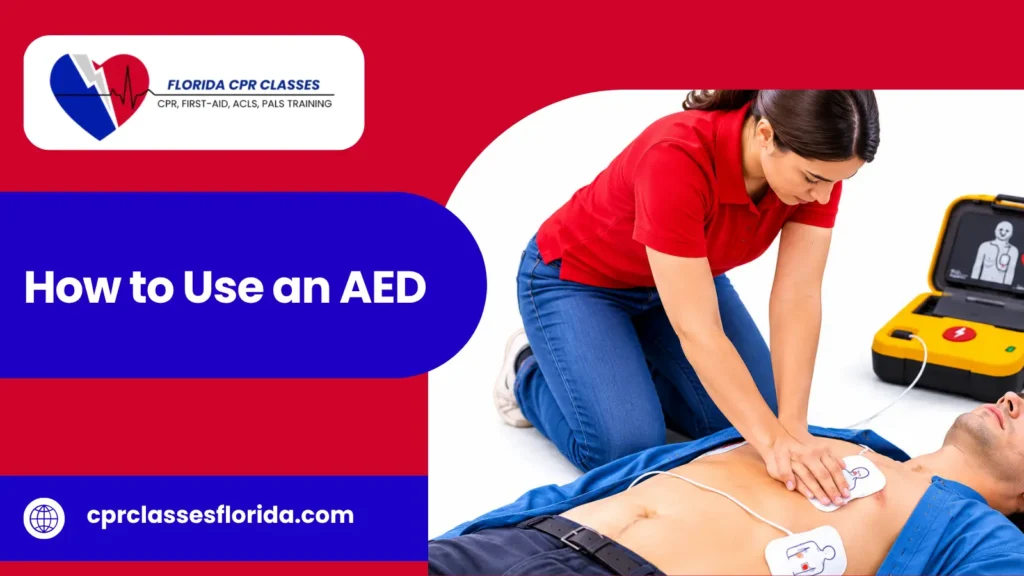
Remove the AED pads from their packaging and peel off the protective backing.
Follow the placement diagrams printed on the pads to position them correctly on the person’s bare chest.
- Place one pad on the upper right side of the chest, below the collarbone.
- Place the second pad on the lower left side of the chest, below the armpit.
Press both pads firmly against the skin to ensure proper contact.
If the AED has a separate pad connector, plug it into the device as instructed.
Step 7: Allow the AED to Analyze the Heart Rhythm
Once the pads are attached, the AED will begin analyzing the person’s heart rhythm.
During this process:
- Stop chest compressions when the AED instructs you to.
- Make sure nobody is touching the person.
- Clearly announce, “Stand clear.”
- Watch to ensure that everyone moves away from the person.
The AED will determine whether the heart rhythm requires a shock.
Step 8: Deliver a Shock If Advised
If the AED announces “Shock advised,” make sure everyone is clear of the person.
Look around the person and loudly announce, “Stand clear!”
If the device is fully automatic, it will deliver the shock automatically. If it is a semi-automatic AED, press the flashing shock button when instructed.
Make sure no one touches the person while the AED delivers the shock.
If the AED announces “No shock advised,” do not attempt to deliver a shock. Follow the AED’s voice prompts and restart CPR immediately.
Step 9: Resume CPR Immediately
After the AED delivers a shock, immediately restart CPR, beginning with chest compressions.
If the AED does not advise a shock, also resume CPR immediately.
Continue CPR according to the device’s prompts. Most AEDs will prompt another heart rhythm analysis after approximately 2 minutes of CPR.
Keep following the AED instructions until:
- Emergency medical personnel take over.
- The person starts moving, responding, or breathing normally.
- The scene becomes unsafe.
- You are physically unable to continue.
If the person starts breathing normally but remains unresponsive, stop CPR, monitor their breathing, and place them in the recovery position if appropriate. Continue monitoring until EMS arrives.
When Should You Use an AED?
Use an automated external defibrillator (AED) when you suspect someone is experiencing sudden cardiac arrest. Look for the following signs:
- Sudden collapse: The person unexpectedly falls to the ground.
- Loss of consciousness: The person does not respond when you speak to them or tap their shoulders.
- Absent or abnormal breathing: The person is not breathing normally or is only gasping.
If you notice these signs, treat the situation as a cardiac arrest emergency and use an AED as soon as possible.
Can Anyone Use an AED Without Training?
Yes. Anyone can use an automated external defibrillator (AED) during an emergency, even without prior training. Public access AEDs provide voice prompts and visual instructions that guide users through each step.
You do not need medical knowledge to operate an AED or interpret an electrocardiogram (ECG). The device automatically analyzes the person’s heart rhythm and determines whether a shock is needed.
Although you can use an AED without training, taking a CPR and AED course can help you recognize cardiac arrest, perform CPR, and use an AED correctly during an emergency.
Common Mistakes to Avoid When Using an AED
Even though AEDs provide voice instructions, certain mistakes can interfere with their proper use.
- Delaying CPR while waiting for an AED to arrive.
- Placing AED pads over clothing instead of bare skin.
- Applying AED pads to a wet chest.
- Allowing someone to touch the person during heart rhythm analysis.
- Touching the person while the AED delivers a shock.
- Delaying AED use when pediatric pads are unavailable.
- Failing to resume CPR immediately after a shock.
- Stopping CPR after the AED gives a no-shock-advised prompt.
Final Thoughts
Knowing the correct AED steps can help you respond to sudden cardiac arrest and provide immediate assistance before emergency medical personnel arrive. Practicing CPR, AED operation, and emergency response skills can also help you act more confidently during a real emergency.
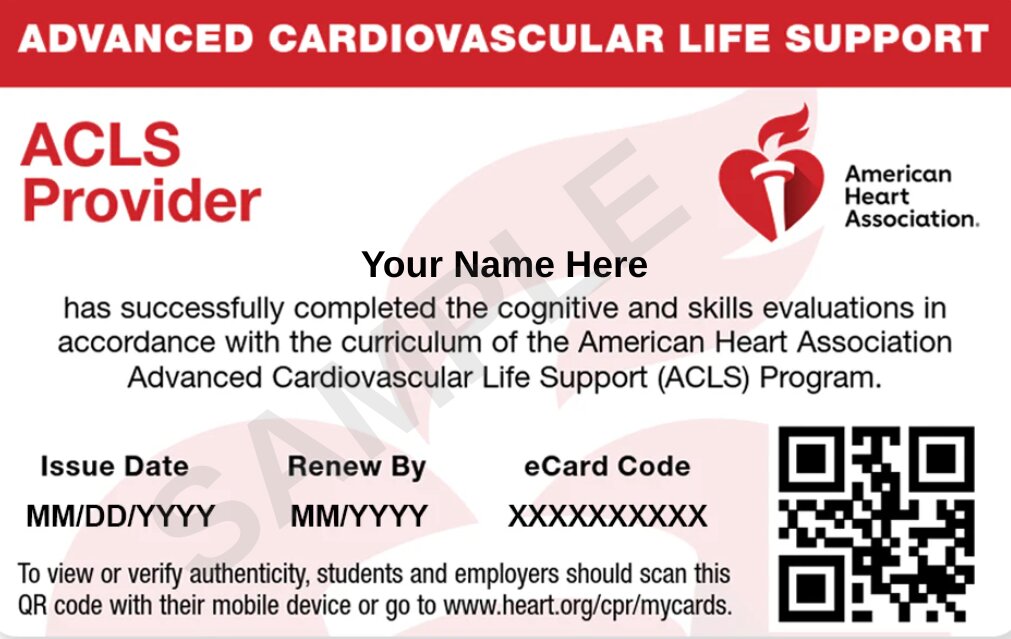
Florida CPR Classes offers American Heart Association (AHA) BLS, ACLS, and PALS courses for healthcare professionals who need initial certification or renewal. Complete the online learning portion and in-person skills assessment to demonstrate your skills. After completing both, you can receive your nationally recognized AHA eCard the same day.
Frequently Asked Questions About Using an AED
What are the 5 steps to using an AED?
The five main steps are to turn on the AED, expose and prepare the chest, attach the AED pads, allow the device to analyze the heart rhythm, and deliver a shock if advised. Immediately resume CPR after a shock or a no-shock prompt.
Do you perform CPR before using an AED?
Yes. Start CPR as soon as you recognize that someone is unresponsive and not breathing normally. Continue CPR while another person retrieves and prepares the AED. Once the AED is ready to analyze the heart rhythm, follow its instructions.
What is the 3-minute rule for AED?
The 3-minute rule refers to the importance of delivering an AED shock within 3 minutes of sudden cardiac arrest when possible. Using an AED as soon as possible after cardiac arrest increases the person’s chance of survival.
When should you do CPR after using an AED?
Resume CPR immediately after the AED delivers a shock or advises that no shock is needed. Follow the device’s voice prompts and continue CPR until emergency medical personnel take over or the person shows signs of life.
Which is the second step of using an AED?
The second step is to call 911 and get an AED. Ask someone nearby to contact emergency services and bring the nearest available AED while you prepare to provide CPR.
Can you use an AED with a bra on?
Yes, but you must expose the person’s bare chest before applying AED pads. Move the bra away from the areas where the AED pads need to go. If it prevents proper pad placement, remove it. Both pads must stick directly to the bare chest.
How easy is an AED to use?
An AED is generally easy to use, even without medical training. The device provides voice prompts and visual instructions to guide you through pad placement, heart rhythm analysis, and shock delivery.