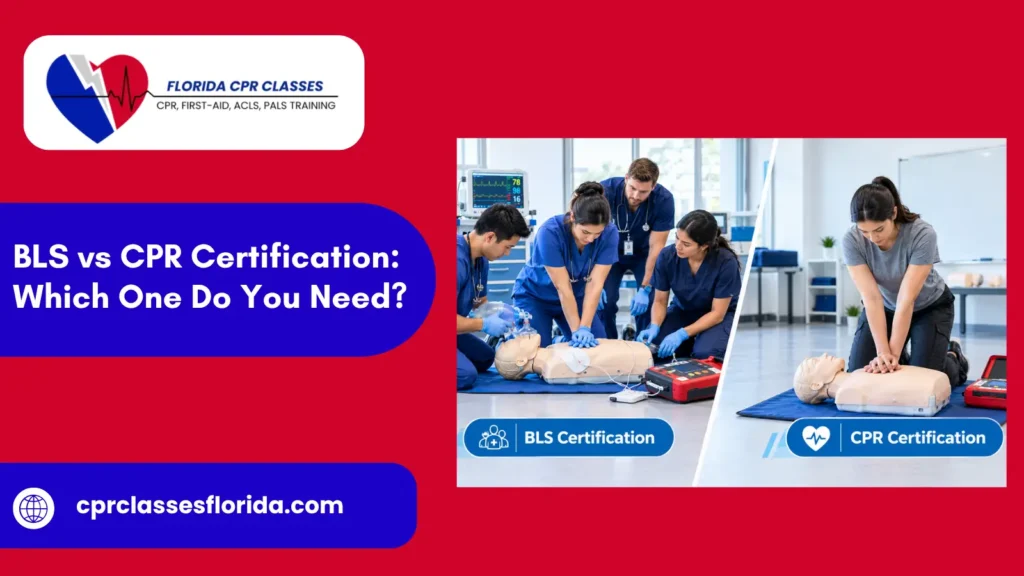
BLS and CPR certification both teach lifesaving skills, but they serve different training needs. Basic Life Support (BLS) certification covers CPR, AED use, ventilation, and team-based resuscitation skills for healthcare professionals and other qualified responders. A general CPR certification course focuses on recognizing cardiac emergencies, performing CPR, and using an automated external defibrillator (AED).
The right choice depends on your profession, workplace requirements, and the skills you need to demonstrate. This guide compares BLS vs CPR certification, including course content, intended audience, duration, validity, and how to choose the appropriate course.
What Is BLS Certification?
Basic Life Support certification prepares participants to recognize life-threatening emergencies and perform essential resuscitation skills in healthcare and prehospital settings. The training emphasizes high-quality CPR, appropriate ventilation, early AED use, and effective teamwork during cardiac arrest.
BLS training goes beyond learning the basic steps of CPR. Participants learn to respond to emergencies both independently and as part of a resuscitation team.
What Does a BLS Course Cover?
A BLS course generally covers:
- High-quality CPR: Performing chest compressions with appropriate depth, rate, recoil, and minimal interruptions.
- Adult, child, and infant resuscitation: Applying age-appropriate CPR techniques.
- AED use: Using an automated external defibrillator (AED) safely and following its voice prompts.
- Rescue breathing and ventilation: Providing appropriate breaths using the techniques taught in the course.
- Teamwork: Effective team dynamics in BLS involve clear communication, defined roles, coordinated compressions and ventilations, and responding to feedback.
- Recognition of life-threatening emergencies: Identifying cardiac arrest and initiating appropriate emergency response procedures.
- Relief of airway obstruction: Performing appropriate choking relief techniques.
The precise skills and assessments depend on the course curriculum. AHA BLS training includes both individual and team-based basic life support skills.
What Is CPR Certification?
Cardiopulmonary resuscitation (CPR) certification confirms that a participant has completed a CPR training course and met its requirements. The course covers CPR for adults, children, and infants, along with AED use, rescue breathing, and choking relief.
General CPR courses teach CPR and basic emergency response, while BLS courses provide broader resuscitation training for healthcare professionals and other qualified responders.
What Does a CPR Certification Course Cover?
A CPR course includes:
- Recognizing cardiac arrest and responding promptly.
- Performing chest compressions.
- Providing rescue breaths when included in the course.
- Using an AED safely.
- Relieving choking in adults, children, or infants, depending on the course.
- Activating emergency medical services and following emergency response procedures.
Some courses cover CPR and AED use only, while others combine CPR, AED, and first aid. Check the course description to confirm which skills are included.
What Is the Difference Between BLS and CPR Certification?
The main difference between BLS and CPR certification is the scope of training. BLS certification prepares participants to respond to cardiac emergencies in healthcare settings, while general CPR certification focuses on helping people recognize emergencies and provide immediate assistance.
| Comparison | BLS Certification | CPR Certification |
| Primary purpose | Develop basic life support and resuscitation skills for healthcare and professional responders | Teach essential skills to respond to cardiac arrest and other specified emergencies |
| Intended audience | Nurses, physicians, EMTs, paramedics, and other professionals who require BLS training | Teachers, coaches, childcare workers, workplace responders, caregivers, and the general public |
| CPR skills | Adult, child, and infant CPR, depending on the course curriculum | CPR for the age groups covered by the selected course |
| AED training | Included | Included when the course is a CPR/AED course |
| Rescue breathing | Includes appropriate ventilation techniques | Depends on the course and age groups covered |
| Team resuscitation | Covers coordinated team response and communication | Generally emphasizes individual emergency response, depending on the course |
| Certification requirements | Completion of the required learning, skills practice, and assessment | Completion of the requirements for the selected CPR course |
| Typical workplace use | Healthcare settings and other positions requiring BLS | Workplaces, schools, childcare facilities, and other settings requiring CPR/AED training |
Which Certification Should You Choose?
The right certification depends on your job duties and your employer’s training requirements. Use the following points to determine which course best fits your needs.
Choose CPR Certification If:
- You want to learn lifesaving skills: A CPR course teaches you how to perform CPR and respond to cardiac emergencies at home, school, or work.
- You work in a nonclinical setting: If you are a teacher, childcare provider, coach, or fitness instructor, CPR/AED training may meet your workplace requirements.
- You need basic emergency response training: A CPR/AED course can teach you chest compressions, AED use, and rescue breathing, depending on the course.
Choose BLS Certification If:
- You work in healthcare: If you are a nurse, physician, dental professional, or healthcare student, BLS may be required by your employer or training program.
- You work in emergency medical services: If you are an EMT or paramedic, check whether your role requires BLS certification.
- You need team resuscitation skills: BLS training prepares you to coordinate CPR, provide appropriate ventilation, communicate with other rescuers, and perform assigned roles during cardiac arrest emergencies.
What If You Are Unsure Which Certification You Need?
Review your employer’s policies, job description, or school requirements before enrolling. If BLS is specifically required, a general CPR certification may not qualify as a substitute. If CPR/AED training meets the stated requirements, you may not need a separate BLS course.
Is BLS Certification the Same as CPR Certification?
No. BLS certification is not the same as general CPR certification, but both include CPR training.
BLS covers a broader set of basic life support skills, including ventilation, AED use, and team-based resuscitation. A general CPR course focuses on the skills included in its particular curriculum and may not cover the full scope of BLS training.
The distinction matters when a workplace or healthcare program requires a specific credential. Completing a CPR course does not automatically mean that you have completed BLS training.
Does BLS Certification Include CPR and AED Training?
Yes. BLS training includes CPR and AED use as essential parts of basic life support. Participants learn to recognize life-threatening emergencies, perform high-quality CPR, provide appropriate ventilation, and use an AED.
BLS also addresses coordinated resuscitation and team communication. These additional components make it appropriate for many healthcare professionals and other responders who need comprehensive basic life support training.
How Long Does BLS Certification Take Compared With CPR Certification?
Course duration varies by provider, learning format, class size, and the skills that must be covered.
An instructor-led course includes teaching, practice, and required assessments. A blended learning course combines online learning with an in-person skills session. The total time may therefore differ even when the course covers the same core objectives.
For reference, the AHA lists its Heartsaver CPR AED course at approximately three to five hours, depending on the selected format and course option. BLS course duration varies by provider and course format, so check the schedule before enrolling.
Do not choose a course based only on which one takes less time. Confirm that the credential meets your professional or workplace requirements.
How Long Are BLS and CPR Certifications Valid?
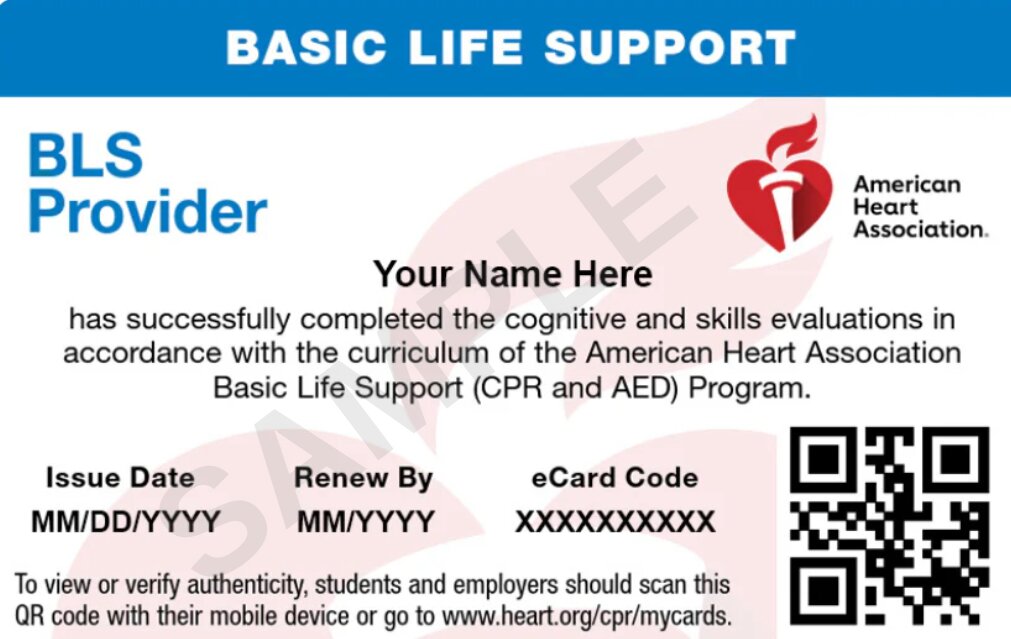
American Heart Association (AHA) BLS and Heartsaver course completion cards are generally valid for two years. Check the expiration date on your card and confirm the renewal requirements with your training provider.
If your employer requires current certification, renew your card before it expires.
Can a CPR Certification Replace BLS Certification?
Not necessarily. A CPR certification cannot automatically replace BLS certification when an employer, healthcare facility, educational program, or licensing body specifically requires BLS.
Although both courses include CPR, BLS covers additional resuscitation skills and team-based response. A general CPR/AED course may not meet the training or credential requirements for a healthcare position.
Before enrolling, confirm the exact credential your organization accepts. If it specifies BLS, select a recognized AHA BLS course that meets those requirements.
Do You Need Both BLS and CPR Certification?
Whether you need both certifications depends on your job requirements. BLS certification includes CPR training and is generally suitable for healthcare professionals who need comprehensive resuscitation skills. A separate CPR certification may be sufficient for people whose jobs require only basic CPR/AED training.
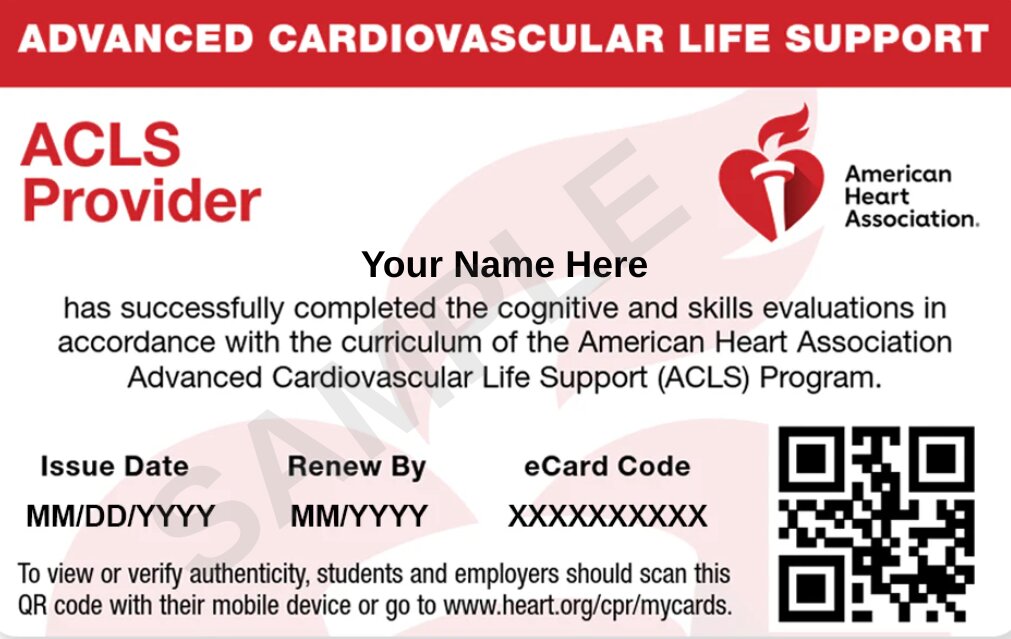
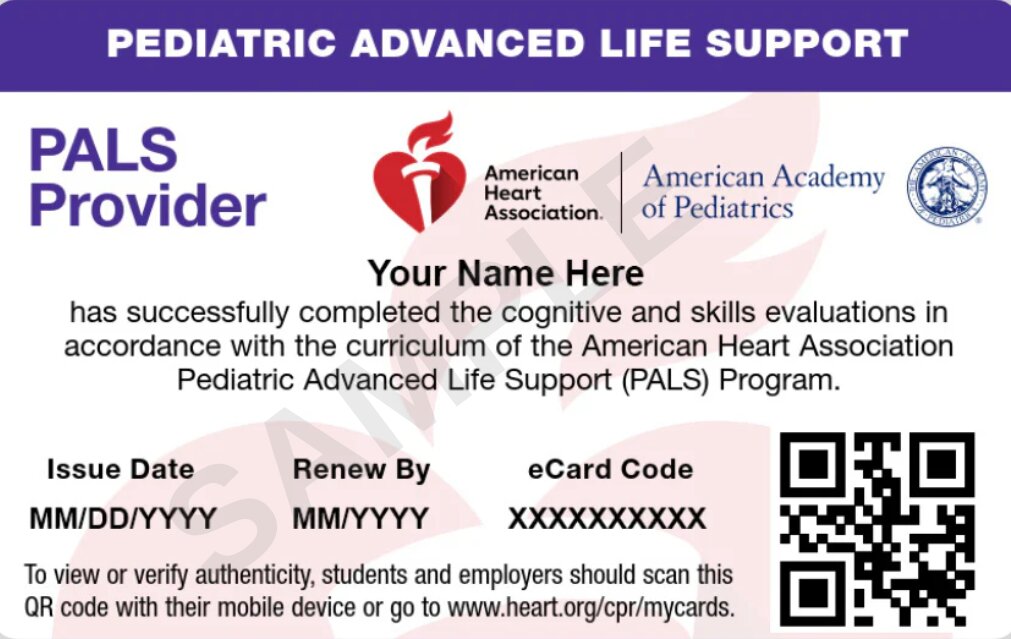
Some healthcare professionals may also need Advanced Cardiovascular Life Support (ACLS) or Pediatric Advanced Life Support (PALS), depending on their responsibilities and employer requirements.
Before enrolling, check your workplace requirements to determine whether you need BLS, CPR/AED, or additional certifications.
Prepare for Emergencies With Florida CPR Classes
Choosing the correct certification helps you meet workplace requirements and prepare for the emergencies you may encounter. BLS is generally appropriate for healthcare professionals who need comprehensive basic life support training, while a CPR/AED course may be sufficient for many workplace responders and members of the public.
Florida CPR Classes offers American Heart Association training options, including BLS, ACLS, and PALS. Review the course requirements for your profession, choose the appropriate training, and check available class schedules before registering. If your employer requires a particular credential, confirm that the course meets that requirement before enrolling.
BLS vs CPR Certification: Frequently Asked Questions
Does BLS certification include first aid?
No. BLS certification does not include first aid training. It focuses on CPR, AED use, ventilation, and other basic life support skills. If your job requires first aid certification, you must complete a separate first aid course.
Do nurses need BLS or CPR certification?
Nurses commonly need BLS certification, but the exact requirement depends on their employer, clinical setting, and applicable professional requirements. Nurses should confirm whether their workplace requires an AHA BLS Provider card or accepts another specified credential.
Do teachers need BLS or CPR certification?
Teachers often need CPR/AED training, while some schools, childcare programs, or specialized positions may require pediatric CPR, first aid, or a combined course. The correct choice depends on the school’s policies and applicable requirements.
Do I need BLS if I have CPR?
No, you do not always need BLS certification if you already have CPR certification. However, if your employer or healthcare training program requires BLS, a general CPR certification may not meet that requirement.
Does BLS Certification Count as CPR Certification?
Yes, BLS certification includes CPR training and may meet CPR certification requirements. However, acceptance depends on your employer’s requirements. Check whether your BLS certification meets their CPR certification requirements.